A practical guide to comparing routes, access, venue details and what return rates can—and cannot—tell you.
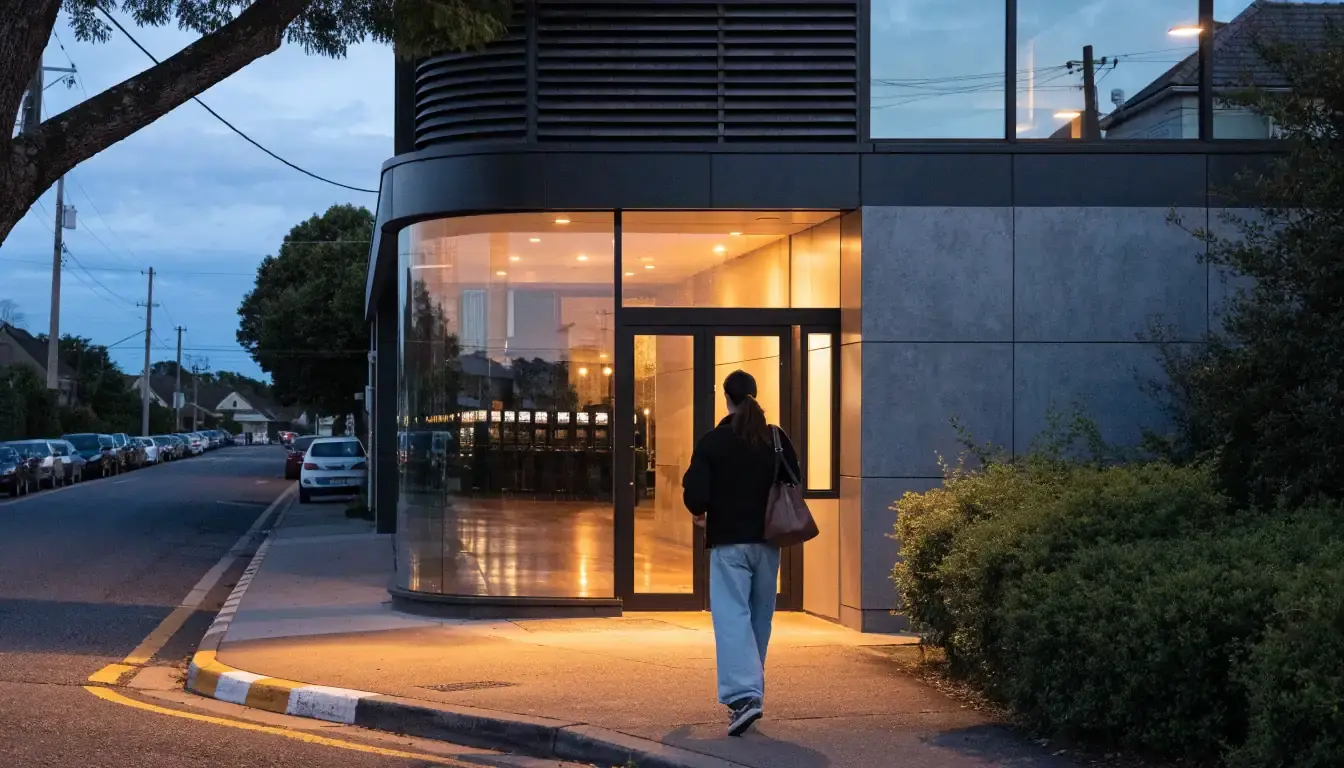
How to assess a pokie venue around Melbourne Airport
A venue described as being near Melbourne Airport may still be inconvenient for your trip. “Near” can refer to a short drive, a location along your route, or simply somewhere in the wider airport area. Before choosing a destination, compare the actual address with where you will start and where you need to go next.
Start with the route, not the label
Use the venue’s full street address to check the journey from your starting point. If you are arriving at the airport, assess the trip from the terminal you will use; if you are leaving from nearby accommodation or another suburb, check from that address instead. A result labelled as airport-area does not tell you how much time or effort the final leg will take.
Consider the whole journey rather than only the distance on a map. A route that looks short may still involve a difficult transfer, a detour, or a long walk from the drop-off point. If you are driving, check the route and parking information for the specific venue. If you are using public transport, confirm the available route and the walk from the stop to the entrance. Do not assume that a venue’s proximity to the airport makes it straightforward to reach.
Choosing pokies in Melbourne for 2026 means weighing what each casino actually discloses before you decide where to play. Use these brief notes as a starting point and check the terms that matter to you.
-
JeetCity Casino
- License
- Curacao eGaming (Dama N.V.)
You can note JeetCity Casino’s stated Curacao eGaming license, held by Dama N.V. The available details do not establish other features of its pokies offering.
-
Bizzo Casino
- License
- Curacao Gaming Control Board (TechSolutions Group N.V.)
Bizzo Casino lists a Curacao Gaming Control Board license under TechSolutions Group N.V. You’ll need to check further details to assess its pokies offering.
-
WinSpirit Casino
- License
- Curacao eGaming OGL/2024/923/0383 (Antillephone N.V.)
- Min. deposit
- A$30
You can check WinSpirit Casino’s stated Curacao eGaming license, OGL/2024/923/0383, issued to Antillephone N.V. Its minimum deposit is A$30.
-
DragonSlots Casino
- License
- Curacao Gaming Authority (Jumpman Gaming Ltd)
DragonSlots Casino lists a Curacao Gaming Authority license under Jumpman Gaming Ltd. You can use that licensing information as one point to consider.
-
Playfina Casino
- License
- Curacao eGaming (Hollycorn N.V., since 2017)
- Min. deposit
- A$20-30 (depends on the offer)
You can note Playfina Casino’s Curacao eGaming license under Hollycorn N.V., held since 2017. The stated minimum deposit is A$20–30, depending on the offer.
-
Kingmaker
- Payout speed
- crypto ~90 minutes, fiat 1-5 days
- Min. deposit
- A$30
Kingmaker lists a minimum deposit of A$30. You can also note its stated payout speeds: about 90 minutes for crypto and 1–5 days for fiat.
-
Golden Pokies
- License
- Curacao
Golden Pokies lists a Curacao license. You’ll need more information to assess its other features.
-
Vegaz Casino
- License
- Curacao OGL/2024/1335/0780
- Min. deposit
- EUR 20
You can check Vegaz Casino’s stated Curacao license, OGL/2024/1335/0780. Its listed minimum deposit is EUR 20.
-
SpinsUp
- License
- Curacao Gaming Control Board OGL/2023/174/0082 (Dama N.V.)
SpinsUp lists a Curacao Gaming Control Board license, OGL/2023/174/0082, under Dama N.V. You can consider this licensing detail when reviewing the casino.
-
Thor Casino
- License
- Curacao – Antillephone N.V. (Versus Odds B.V.)
- Min. deposit
- EUR 20
You can note Thor Casino’s stated Curacao license with Antillephone N.V. (Versus Odds B.V.). Its minimum deposit is EUR 20.
Map and journey information can change. Check it close to the time you plan to travel, and use the venue’s own contact details to resolve practical uncertainties such as which entrance to use or where a vehicle can stop. If the address shown on a listing differs from the address on the venue’s own information, confirm the correct one before setting out.
Compare the trip you actually need to make
The best choice depends on your itinerary. Someone with time between appointments may be able to make a separate trip; someone catching transport or meeting others may need a destination that fits directly into the existing route. Compare each option against the same starting point and travel method, rather than judging one by driving distance and another by a general map pin.
Include the return journey in that comparison. Check how you will get back to your accommodation, airport terminal, or next stop, and whether the route remains practical at the time you expect to leave. A venue can be easy to reach on the outward trip but awkward as part of a longer itinerary. If you will have luggage, mobility needs, or limited time, account for those constraints when assessing the route rather than treating them as minor details.
A “near me” result can also be misleading if your device location is approximate or has not updated. Check the address itself and compare it with a map, not just the order in which venues appear. If you are already at Melbourne Airport, use your current terminal or pickup point as the origin. If you are elsewhere in Melbourne, recalculate from your actual location.

Separate airport-area choices from city-centre choices
Melbourne Airport and Melbourne Central describe different starting points for a trip. A result that suits travel from the airport may not be convenient from the central city, and the reverse is also true. If you are considering a venue near Melbourne Central, compare its address against your city itinerary rather than assuming that it belongs to the same practical search area as the airport.
Port Melbourne is another distinct location to assess by its address and route. Treat it as a separate destination unless it genuinely fits your journey. The same principle applies when you are looking across Melbourne or within Victoria: a broad location label cannot tell you whether a particular trip will be manageable.
This distinction helps prevent a common planning error: choosing a venue because its description contains a familiar landmark, then discovering that the landmark is not a useful measure of the journey you need to make. Use the landmark only as a starting reference; the address and route determine the practical fit.
Verify before you travel
Before leaving, confirm that the venue’s address and access details are current. Check whether the entrance shown on a map is the public entrance, whether parking information applies to that location, and whether your chosen transport route reaches the right part of the site. If any detail is unclear, contact the venue rather than relying on an old listing or a map pin.
- Check the venue's full street address
- Assess the trip from your specific starting point
- Confirm the return journey route
- Verify the correct public entrance and parking
- Contact the venue to resolve any practical uncertainties
A useful comparison can be kept simple: write down the address, your starting point, the outward route, the return route, and any access detail that could affect the trip. This makes it easier to compare airport-area options on equal terms and to rule out a place that does not fit your itinerary. It does not establish anything about the venue’s machines or facilities; it only tests whether getting there and back works for you.
Opening hours and responsible play
A venue’s opening hours and the hours when its pokies are available are not necessarily the same thing. Before travelling, check the venue’s current information and confirm whether the gaming area will be operating at the time you plan to arrive. A restaurant, bar or club may be open while its gaming facilities are not, so a general “open” status is not enough to establish that you can play.
Confirm the hours that matter
Start with the venue’s own website or another channel it maintains, and look for hours specifically associated with the gaming area. If those details are unclear, contact the venue and ask directly. This is especially useful when you need to know whether pokies are available early in the morning, late at night or at a particular time on a public holiday. Do not treat a listing that says a venue is open now as confirmation that its gaming area is open now.
Check the day as well as the time. A venue may publish different hours for different days, and a schedule can change for a special event, maintenance or another operational reason. If you are travelling a long distance or arranging transport around the visit, confirm the hours shortly before leaving rather than relying on an old saved listing. If the venue cannot confirm that pokies will be operating when you arrive, plan on that uncertainty rather than assuming access.

It also helps to separate three details: when the venue opens, when the gaming area opens and when gaming stops. A stated closing time may apply to the whole premises rather than to the machines, or vice versa. Ask which time applies to the activity you intend to take part in. This avoids making a trip based on a broad venue-hours label that does not answer the practical question.
The same check applies if you are already nearby. A map or directory can be useful for finding a venue, but its status indicator may not describe the gaming area’s schedule. Verify the specific service and the day’s hours through the venue’s own information. If you cannot get a clear answer, choose whether to travel on the basis of what is confirmed, not on an assumption that Melbourne venues operate around the clock.
Set the boundaries before you play
Responsible play works best when you decide your boundaries before entering the gaming area. Deposit limits, loss limits and session time limits are standard tools for controlling different parts of a session. A deposit limit controls how much money you can add; a loss limit sets a boundary on losses; and a time limit helps prevent a session from extending beyond the period you intended. These tools do not change the outcome of a game, but they can help you keep your spending and time within limits you have chosen.
Do
- Set boundaries before entering the gaming area
- Use deposit, loss, and time limits
- Set limits based on what you can afford to lose
- Decide on a clear stopping point in advance
Don't
- Change boundaries in response to how a session is going
- Treat a loss limit as a target to spend up to
- Assume one self-exclusion covers all venues
- Rely on a limit alone if you repeatedly extend sessions
Check how a limit is set and when it takes effect before relying on it. A tool is useful only if you understand what it measures and how it applies to your play. If the venue or service offers limit-setting tools, read the terms on screen or ask staff to explain the process. Set boundaries that reflect what you can afford to lose and the time you can spare, rather than changing them in response to how a session is going.
A practical plan can also include a clear stopping point. Decide in advance when you will leave and what you will do if you reach your spending limit sooner. Avoid treating a loss limit as a target to spend up to: it is a ceiling, not an instruction to continue playing. If you find that you are repeatedly extending a session or moving a boundary, pause and consider using stronger support rather than relying on another limit alone.
Self-exclusion is a stronger option when you want to prevent yourself from gambling at a venue or through a service covered by the arrangement. Before enrolling, confirm what the exclusion applies to, how it is activated and what steps are required if you later want to change it. Do not assume that an exclusion covering one venue or service automatically applies everywhere. If you are unsure what is included, ask the provider to explain the scope before you rely on it.
Check the age requirement
You must be at least 18 years old to gamble in Australia, including on pokies. If staff ask you to establish your age, follow the venue’s identification process. Do not assume that appearance, a booking or entry to another part of the premises removes the age requirement for gambling.

If you are visiting with other people, make sure everyone who intends to play meets the same requirement. A venue’s general entry arrangements do not change the legal age for gambling. When there is any doubt about entry to the gaming area, ask the venue before travelling or before proceeding inside.
Keep the visit within your plan
Before setting out, make sure the hours suit the length of visit you have planned. If the gaming area is due to close soon, arriving just before that time may leave less opportunity to follow the session boundary you intended. Conversely, an early opening does not mean you need to use the available time. The decision to play, and when to stop, remains separate from the venue’s schedule.
Keep your transport and spending plans independent of a hoped-for result. A win is not a reliable way to fund the journey home or recover previous losses. If you feel pressure to continue, take a break or leave the venue; limits and self-exclusion tools are there to support decisions made before a session becomes difficult to manage.
What a pokie’s return rate can—and cannot—tell you
A pokie’s return to player rate, or RTP, describes a theoretical proportion of wagers that a game is designed to return as prizes over a very large number of plays. It is a property of the game configuration, not a promise about what you will receive during a visit. A displayed rate can help you understand the game’s long-run design, but it cannot tell you whether the next spin—or your session—will produce a win.
- Return to Player (RTP)
-
A theoretical proportion of wagers that a game is designed to return as prizes over a very large number of plays. It describes long-run design rather than a promise of a specific return during a single visit.
The distinction matters when you compare pokies at different Melbourne venues. A specialist review reports that some game providers give casinos a choice of RTP settings for a particular pokie. If that applies, the same game title may run with different return percentages in different casinos. The title alone therefore may not identify the version you are playing. Treat a rate as useful only when it is clearly tied to the specific game configuration available at that venue.
A stated rate also needs interpretation. It is a theoretical measure across extensive play, not a schedule that returns a fixed share of your own wagers. It does not mean a machine tracks what you have lost and then pays you back, nor does it set a limit on how much an individual player can win or lose. Your results over a short session can differ substantially from the long-run figure.
That follows from how each spin works. A pokie uses a Random Number Generator, and each spin is an independent random event. The result of one spin does not make a win on the next spin more likely, and a sequence of losses does not create a debt the game must repay. Past results are not a signal that the next outcome is due.
This is why phrases such as “best paying pokies” can be misleading without a verified, configuration-specific rate. A game’s reputation or title does not establish its current setting, and a rate by itself says nothing about whether you will leave ahead. If you cannot confirm which version is in use, avoid treating an advertised figure as a reliable comparison between venues.

Even where a rate is available, it answers a narrow question: how the configured game is intended to behave over extensive play. It does not describe the timing or size of individual wins, the volatility of outcomes, or the result of a particular session. Those are separate considerations, and a high theoretical return should not be read as a low-risk way to play.
When assessing a pokie, check whether the rate refers to that exact game and configuration, and whether the information is clearly presented by the venue. If it is not, the game name alone is insufficient evidence for a numerical comparison. For a search focused on pokies in Melbourne, this keeps the comparison grounded: RTP can describe a long-run design characteristic, but it cannot rank venues by the outcome you are likely to experience on a particular day.
Set your spending decision independently of the displayed rate. A theoretical return does not change the randomness of individual spins or ensure that any part of your stake will come back during your visit. Treating RTP as a description of long-run mechanics—not a forecast—is the soundest way to use it.
What to check at Melbourne pokie venues
A venue’s machines are only one part of what you are assessing. Its operating procedures matter too: they determine who responds when a patron appears to be experiencing gambling harm, and whether the venue records incidents in a consistent way. These checks help you compare how venues manage their responsibilities; they do not establish that one venue has better games or outcomes.
Responsible Gambling Officers
From 1 July, venues with more than 20 gaming machines are required to have a responsible gambling officer (RGO) on duty whenever those machines are operating.
Check who is responsible on the floor
Ask how to contact staff if you or someone with you needs assistance. At a venue with many machines, it is useful to know whether a designated person is available and how staff escalate a concern. The title and presence of a staff member alone do not show how a venue handles every situation, but a clear explanation of the process is more informative than a general assurance.
A report by regionriverina.com.au describes a requirement starting on 1 July for venues with more than 20 gaming machines to have a responsible gambling officer (RGO) on duty whenever those machines are operating. The report also describes a one-month transition period for venues to introduce the officer role and remove signage.
If you contact a venue, ask whether an RGO is on duty during the period you plan to visit, if the requirement applies there, and how patrons can reach that person. A venue’s answer should make the practical arrangements understandable: who to approach, and what happens next if staff are concerned about someone’s behaviour.

Look for a process, not a promise
A venue-level process should give staff a way to recognise and respond to signs that a patron may be at risk of gambling harm. One operational measure described in the same report is a gambling incident register. It is intended to capture details of relevant occurrences, including behaviour suggesting that a patron may be affected by gambling harm.
The register matters because it turns an incident into a recorded event rather than leaving the response entirely to memory. When comparing venues, you can ask whether staff have a procedure for recording and following up concerns. You do not need private information about other patrons; the useful answer is an explanation of the process, not access to individual records.
A register is not, by itself, proof that every incident is identified or handled well. It is one component of venue operations. Consider whether staff can describe how concerns are passed to the appropriate person and how they respond when a patron asks for help. If answers are unclear, treat that as a reason to ask further questions rather than as evidence of a specific breach.
Compare what you can verify
For Melbourne pokie venues, separate observable details from claims. You can check the venue’s location and contact details before travelling, then ask directly about its staff procedures and how to raise a concern. Where a venue refers to an RGO or an incident register, ask what that means in practice. A precise answer lets you compare arrangements without assuming that every venue has identical obligations or procedures.
No single operational feature identifies the best pokie venue in Melbourne. The useful comparison is whether you can understand who is responsible, how a concern is handled, and whether the venue can explain the process clearly. Treat reported rules as a prompt to verify local applicability, not as a substitute for checking how the particular venue operates.
Crown Melbourne: what this guide can verify
Crown Melbourne is a specific venue name, but the name alone does not establish which pokies are available, how they are arranged, or whether one room is better suited to you than another. A claim about a “best pokies room” needs a defined basis: best for what, and according to which current, checkable details? Without that, “best” is a label rather than a useful comparison.
If you are considering Crown Melbourne, separate venue-specific information from general descriptions of pokies. A statement about a particular game, room, facility or service should clearly identify what it refers to and when the information was checked. Details copied into directories or discussion pages may not describe the venue’s present arrangements. Treat them as leads to verify, not as proof that a feature is currently available.
The same distinction matters when a page uses “Crown Casino Melbourne” or “Crown Melbourne casino” as shorthand. Those phrases can point to the venue, but they do not tell you what you will find there. A game title mentioned in a broad article is not evidence that the game is installed at Crown Melbourne. Nor does a photograph or an undated list establish that a particular pokie remains in place.

For a useful comparison, look for details that are both specific and attributable to the venue: the exact feature being described, the date or context of the information, and whether it applies to the area you intend to visit. If those details are absent, avoid treating a general recommendation as a confirmed description of Crown Melbourne. A ranking is meaningful only when its criteria are clear; personal preferences about themes, layouts or play style do not create a universal ranking.
Keep your decision focused on information you can verify before travelling. If you cannot establish whether a particular room or game is available, do not build your plans around it. This is especially important when a page combines Crown Melbourne with broad claims about the “best pokies” in the city: city-wide promotional wording does not, by itself, describe the venue’s current selection.
This approach does not require you to infer that Crown Melbourne has—or lacks—any particular pokie, room or service. It simply keeps the distinction clear between a named destination and confirmed details about what is there. A reliable decision starts with the latter, not with a superlative.

Online pokies and cashless payments: the Australian limits
A payment method and the legal status of a gambling service are separate things. PayID, for instance, is a payment mechanism, not a gambling licence or a test of whether a service may legally offer real-money pokies to people in Australia.
The Interactive Gambling Act 2001 prohibits operators from providing real-money online casino games, including pokies, to people in Australia. No Australian licence for an online casino has been issued. That means a service does not become locally authorised because it accepts a familiar payment method, uses Australian dollars or describes itself as a Melbourne casino.
PayID is an alias layer on the New Payments Platform (NPP). It can route a transfer using an email address, mobile number or ABN, with the underlying transfer linked to a bank account. The NPP is supported by major banks and uses end-to-end encryption. These properties describe how payments are addressed and transmitted; they say nothing about whether a gambling operator is licensed, whether a game is fair or what return setting it uses.
Legal Risk
The Interactive Gambling Act 2001 prohibits operators from providing real-money online casino games to people in Australia, meaning offshore sites lack local licensing and legal protections.
The same distinction matters when you see claims about cashless pokies in Melbourne. “Cashless” describes how money is moved or accounted for, not the legality of the activity. A cashless payment feature cannot turn an online real-money pokie service into an Australian-licensed casino. Nor does the phrase “high-limit” establish anything about the operator’s legal status or the terms that apply.
The law is directed at providers, not individual players. Australians are not made criminally liable simply for playing on an offshore site that accepts them. That does not make such a service locally licensed or provide the protections of an Australian online casino. If an offshore operator withholds winnings, Australian players have no legal recourse in Australia to recover them through the domestic gambling framework. Access may also be restricted: the Australian Communications and Media Authority (ACMA) blocks illegal offshore gambling sites, and internet service providers must comply with its blocklist.
For that reason, searches for online pokies near Melbourne or the best-paying online games should not be treated as evidence that a local online casino exists. A payment logo, a Melbourne reference or a claimed payout rate cannot change the legal position. If a service invites you to deposit, assess the legal and recovery risks independently of its payment options; do not treat PayID as proof of approval or protection.
Pokie venues across Melbourne’s east and west
A regional search can help narrow down where to look, but a suburb label is not evidence that a particular venue exists, has gaming machines or is open to visitors. Treat east, south-east and western-suburbs searches as starting points for checking specific addresses, rather than as confirmed venue directories.

For an eastern Melbourne trip, first decide which part of the region is practical for you to reach. Then check each candidate’s exact address and compare it with your intended route. “East Melbourne” may refer to a broad area in casual use; a venue’s postal address is more useful for planning than a regional label. Apply the same method in the south-east: identify the suburb you mean, then confirm the location directly before setting out.
The western suburbs require the same address-level check. A result described as being in the west may still be inconvenient from your starting point, so compare the actual route rather than relying on the regional description. If your plans include St Kilda, treat it as a distinct destination and verify its address separately instead of assuming it falls within the area covered by a broad south-east listing.
Some searches combine place names in a way that may point to different cities. If a result mentions Newcastle alongside Melbourne, check which city the address is actually in; do not assume that the result refers to a Melbourne venue. A map pin, street address and venue’s own current information should agree before you travel.
A useful comparison is based on practical details you can verify: the address, the route from your starting point, and whether the information comes from the venue itself or an independent directory. If listings disagree, contact the venue using its published details rather than inferring availability from a search result. This approach helps you distinguish a genuine local option from a broad, outdated or misplaced listing without assuming that any particular suburb has a venue.
A request for maximum-bet pokies does not identify a location or establish what a venue offers. Do not infer machine settings from a suburb name or from a general listing. Confirm any venue-specific details directly, and keep the location check separate from questions about individual games.
Finding pokie venues in the CBD
A venue described as being in Melbourne’s CBD may still be inconvenient for your route. Before travelling, confirm its full street address and identify the entrance you are expected to use. A suburb label or map pin alone may not show whether the venue is inside a larger building, on a different street from its listed address, or reached through a particular entrance.
For club-related searches, check the name of the club as well as the address. Similar names can refer to different organisations or locations, and a result may describe a club without making clear whether it has pokies. Contact the venue directly if that detail matters to your visit; do not infer machine availability from a category label, a photograph or a general description.
Compare locations against your actual starting point and destination. Look at the walking route, public transport connections and any access instructions supplied by the venue. If you are meeting someone, agree on a precise entrance or address rather than relying on a broad CBD location. Recheck the details close to departure, especially if the information comes from a third-party listing rather than the venue itself.
“Best” is not a useful measure unless you define what you need. You might prioritise a location that fits your route, clear access information, or a particular venue type. Treat rankings and summaries as starting points, then confirm the specific details that affect your decision. A polished listing does not establish that the information is current.
If self-exclusion is part of your planning, ask the venue what process applies before you go. Do not assume that an exclusion arrangement connected to one service automatically applies to another. BetStop applies to Australian-licensed operators; it does not bind offshore sites. For a visit to a physical venue, confirm the venue’s own process rather than relying on an online listing.

These checks keep a central-city search practical: establish the exact place, confirm the details that matter to your visit, and make the journey only when those details are clear.
North and South Melbourne venue searches
North Melbourne and South Melbourne are separate neighbourhood searches, so confirm which one a listing refers to before planning a trip. A result that mentions Melbourne without a clear street address is not enough to establish where the venue is. Check the full address against a current map, then confirm that the map pin and the venue’s own location details match.
For North Melbourne, check that the address is actually in the neighbourhood you intend to visit, rather than relying on a broad “Melbourne” label. Apply the same check to South Melbourne: a nearby suburb or a central-city result may appear relevant in a general search but can involve a different destination. If the listing gives only a suburb name, ask the venue for its street address before travelling.

Once you have an address, consider the route from your starting point and how you will reach the entrance. Map directions can take you to a nearby street or the rear of a building, so compare the pin with the venue’s stated entrance details. If those details are unclear or inconsistent, contact the venue rather than assuming the map is correct.
Treat claims about pokies as something to confirm with the venue directly. A directory entry or search snippet may be incomplete or out of date; it does not, by itself, confirm that a particular venue has pokies or that they will be available when you arrive. Verify the location and the specific information you need through a current venue-controlled source before setting out. This keeps a North Melbourne visit distinct from a South Melbourne one and reduces the chance of travelling to the wrong address or relying on an unconfirmed listing.
Are online pokies legal for Australian players?
Yes, you can play on offshore sites that accept Australian players, but companies cannot legally offer real-money online pokies to Australians without a domestic licence, and none have been issued. If an offshore casino withholds your winnings, you have no legal recourse in Australia.
What is the minimum PayID deposit?
Most operators set minimum deposits at AU$10 to AU$20, while some accept AU$5. PayID is treated like other qualifying deposit methods.
What is the cost-benefit calculation of casino promotions?
Check the wagering requirement and any cash-out cap before accepting an offer. For example, a $500 bonus with a 40x requirement means AU$20,000 in bets before you can withdraw winnings; a 35x requirement on a AU$500 deposit plus a AU$500 bonus means AU$35,000 in bets.
Are online pokies rigged?
Each spin is an independent random event determined by a Random Number Generator. However, some providers let casinos choose between different RTP settings for the same game, so its return percentage can vary between casinos.
How do I know if an online casino is safe to play at?
There is no Australian-licensed online casino, and you have no legal recourse in Australia if an offshore casino refuses to pay your winnings. Keep that risk in mind when choosing where to play.
What is the best payment method for fast withdrawals in Australia?
E-wallets such as Skrill and Neteller are popular for their speed. Check the casino’s withdrawal terms too, as some cap weekly or monthly withdrawals at AU$5,000–AU$10,000.