A practical guide to checking hotel bookings, dining, gaming and venue-related searches without treating labels as confirmation.

Staying at the Brisbane Casino Hotel
A casino hotel search can refer to a hotel operated as part of a casino complex, a hotel associated with a casino, or simply a room someone hopes to book during a casino visit. Those are not interchangeable arrangements. Before planning around an overnight stay, confirm that the hotel is currently bookable through an official venue or hotel channel and that the booking relates to the property you intend to visit.
Checking room information
Room descriptions matter because labels alone do not establish what a booking includes. Read the details attached to the specific room and dates you select: check the occupancy, bed configuration, accessibility information, and any stated inclusions or exclusions. If a feature is important to you, such as a particular view or accessible layout, look for it in the room’s own description or ask the hotel to confirm it before you pay.
Availability is date-specific. A room shown on one date may not be offered on another, and a displayed category does not guarantee that it can be booked for your stay. Compare the full details for the dates you need rather than relying on a general room page or an old listing. Keep the booking confirmation, since it records the room category and conditions that apply to your reservation.
Choosing a casino for Brisbane means considering the details that matter to you, including licensing and payment terms. Use these operator notes as a starting point for your 2026 shortlist.
-
JeetCity Casino
- License
- Curacao eGaming (Dama N.V.)
JeetCity Casino is listed with a Curacao eGaming license held by Dama N.V. This gives you a licensing detail to consider when evaluating the casino.
-
Bizzo Casino
- License
- Curacao Gaming Control Board (TechSolutions Group N.V.)
Bizzo Casino is listed with a Curacao Gaming Control Board license held by TechSolutions Group N.V. You can use that information as part of your review.
-
WinSpirit Casino
- License
- Curacao eGaming OGL/2024/923/0383 (Antillephone N.V.)
- Min. deposit
- A$30
WinSpirit Casino lists a Curacao eGaming license, OGL/2024/923/0383, held by Antillephone N.V. Its stated minimum deposit is A$30.
-
DragonSlots Casino
- License
- Curacao Gaming Authority (Jumpman Gaming Ltd)
DragonSlots Casino is listed with a Curacao Gaming Authority license held by Jumpman Gaming Ltd. This provides a licensing detail for you to check.
-
Playfina Casino
- License
- Curacao eGaming (Hollycorn N.V., since 2017)
- Min. deposit
- A$20-30 (depends on the offer)
Playfina Casino lists a Curacao eGaming license held by Hollycorn N.V. since 2017. Its minimum deposit is A$20–30, depending on the offer.
-
Kingmaker
- Payout speed
- crypto ~90 minutes, fiat 1-5 days
- Min. deposit
- A$30
Kingmaker lists crypto payouts at around 90 minutes and fiat payouts in 1–5 days. The stated minimum deposit is A$30.
-
Golden Pokies
- License
- Curacao
Golden Pokies is listed with a Curacao license. This is the available licensing detail for you to take into account.
-
Vegaz Casino
- License
- Curacao OGL/2024/1335/0780
- Min. deposit
- EUR 20
Vegaz Casino lists a Curacao license, OGL/2024/1335/0780. Its stated minimum deposit is EUR 20.
-
SpinsUp
- License
- Curacao Gaming Control Board OGL/2023/174/0082 (Dama N.V.)
SpinsUp is listed with a Curacao Gaming Control Board license, OGL/2023/174/0082, held by Dama N.V. This gives you a licensing detail to consider.
-
Thor Casino
- License
- Curacao – Antillephone N.V. (Versus Odds B.V.)
- Min. deposit
- EUR 20
Thor Casino lists a Curacao license from Antillephone N.V. (Versus Odds B.V.). Its stated minimum deposit is EUR 20.
Check the booking rules as carefully as the room description. The terms should explain how payment is handled, whether changes or cancellation are permitted, and what happens if your plans change. Do not assume that a flexible rate, a particular check-in arrangement, or an included service is available unless the offer states it for your booking. If information conflicts across pages, confirm the detail directly with the hotel before making plans around it.
Assessing hotel deals
A deal is useful only when its conditions fit your trip. Compare the total price and the stated inclusions with the standard booking option for the same dates and room category. A lower displayed rate may come with different change or cancellation terms, while a package may include elements you do not need. Read the conditions attached to the actual offer rather than relying on a headline or promotional label.
Check whether the offer applies to your dates, how long the booking must cover, and whether any restrictions affect its use. These details can change the practical value of a deal even when the room itself appears similar. If a claimed benefit is not described in the booking terms, treat it as unconfirmed and ask the hotel to clarify it before committing.
Search results and third-party booking pages can remain visible after an offer has changed. Confirm the final amount and conditions on the page where you complete the reservation, and make sure the confirmation matches what you selected. This reduces the chance of relying on an expired promotion or assuming that a feature from one rate also applies to another.
 Canberra Casino Guide: Rooms, Games and Nearby StaysLearn how casino-operated accommodation differs from a separate hotel stay, and what to check on room types, payment terms and cancellation policies.
 Melbourne Pokies: How to Assess VenuesThis guide focuses on practical venue checks: compare the full address and route, transport access, opening hours and responsible-play information.
Hotel hours and casino hours
A hotel stay and casino access are separate services, so their operating times should not be treated as the same schedule. A hotel may handle arrivals and departures according to its own policies, while casino opening times are a separate question. If you are arranging travel around either, check the relevant official information close to your visit; do not infer current hours from a search snippet, an old listing, or the fact that a booking is available.
For a Brisbane casino hotel, the practical sequence is straightforward: establish which property is being offered, verify that the room is available for your dates, read the rate conditions, and confirm any detail that affects your plans. That gives you a basis for comparing hotel options without assuming that a particular room type, package, or schedule is currently available.
Accommodation Near the Casino
If you are looking for accommodation near the Brisbane casino, start by deciding whether you want to stay at the casino hotel or compare other places to stay in the surrounding area. This section is about the second option: independent accommodation, assessed on its own location, terms and suitability. A place described as “near” may not be next door, so check its address against the venue’s current location before booking.
Do
- Use a map to compare the accommodation address with the casino address
- Compare the full cost and booking conditions for your dates
- Confirm the final amount and conditions at checkout
Don't
- Rely on straight-line distance or vague labels like "close"
- Infer booking terms from the property's proximity to the casino
- Assume a casino promotion automatically includes a room
Use a map to compare the accommodation address with the casino address, then consider the route you would actually take. Straight-line distance can be misleading when streets, crossings or access points affect the journey. If you expect to travel at a particular time, check the route and transport arrangements for that time rather than assuming that a short-looking map distance means a simple trip.
Compare the full cost and booking conditions, not just the headline rate. A displayed price may depend on dates, room occupancy, cancellation rules or other conditions. Check what is included, when payment is due, and whether changing or cancelling the booking would incur a charge. These details belong to the accommodation provider’s terms; they should not be inferred from the fact that a property is near a casino.
“Brisbane casino accommodation deals” can refer to different things: a reduced room rate, a package, or a promotion connected with a particular provider. Treat a deal as valid only when its terms identify who is offering it, which dates it covers and what you must do to qualify. Do not assume that a casino promotion includes a room, or that a hotel discount applies to every date. If an offer is unclear, confirm its conditions with the business responsible for it before paying.
The venue’s location is an important reference point, but it does not establish that surrounding accommodation is affiliated with the casino. Check the property’s own description and booking conditions to determine who provides the room and handles any booking issue. If a listing makes a claim about a casino-linked benefit, look for the exact terms rather than relying on a short promotional label.
 Darwin Casino Searches: What Can Be ConfirmedSeparate proposed developments and job listings from confirmed operating venues, and see which hotel, dining and facility details still need verification.
 Pokies in Sydney: Finding Venues and Checking DetailsLearn how to distinguish Sydney venue listings from online services, check opening status, and understand what return and randomness do—and don't—tell you.
A practical comparison can be made without relying on vague labels such as “close” or “best value.” Record each option’s address, total quoted cost for your dates, cancellation terms, included services and route to the venue. Then compare like with like: different dates or room conditions can make two headline prices poor points of comparison. Confirm that the listing still reflects the terms shown at checkout, since availability and offers can change.
Before booking, check the venue address through an up-to-date official source and compare it with the accommodation provider’s current listing. This reduces the risk of choosing a place based on an outdated map pin or description. Keep the booking confirmation and the terms that applied when you paid; those are the relevant records if the advertised conditions and the final booking do not match.
Choosing accommodation near the casino is therefore a location-and-terms decision, not proof of a package or special access. Compare independent options against your own travel needs, and verify every price, inclusion and condition with the provider offering it.
Poker, Gaming Rooms and Gym Searches
Poker, gaming rooms and gym-related searches can point to different parts of a visit, even when they use the same venue name. A poker room is associated with live card play; a tournament is a scheduled competition with its own entry conditions and format. A gym is a fitness facility, while “rooms” may refer to hotel accommodation or to rooms within the venue. Treating these as interchangeable can lead you to the wrong information.
Live poker and pokies are different forms of gambling with different equipment and ways of playing; a page mentioning poker broadly may not confirm a live poker room is open.
A search for poker at the Brisbane casino does not establish that a dedicated poker room is operating or that games are running. The same applies to tournament listings: a result may be old, refer to a past event, or describe another venue. Before making plans, look for current information from the venue itself and confirm that it refers to the Brisbane location. For a tournament, check whether the event is actually scheduled, who may enter, and what registration conditions apply. A general poker page is not proof that a particular game or competition is available on the day you intend to visit.
It also helps to distinguish live poker from pokies. They are different forms of gambling, with different equipment and ways of playing. If you are looking for a card game, make sure the information describes live poker rather than electronic gaming machines or an online game. A page mentioning poker in a broad description may not answer whether a live poker room is open to visitors.
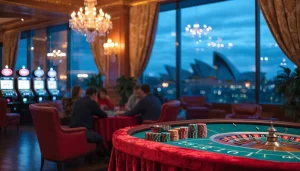
“Gaming rooms” is similarly broad. It can describe an area for electronic gaming, a card-playing space, or simply a room used for gaming-related activity. Read the surrounding details rather than relying on the label alone. A room name does not tell you which games are available, whether access is public, or whether an event is taking place there.
Gym searches are a separate facility question. A hotel or casino result containing the word “gym” does not by itself confirm that a fitness facility is part of the venue, that visitors can use it, or that it is available to non-guests. Check the exact facility description and any access conditions before treating a listing as relevant. Keep this separate from searches for casino rooms: those may concern accommodation, which requires different information and is not evidence of a gaming or fitness facility.
The term “rooms” can therefore produce mixed results. If you mean somewhere to sleep, assess accommodation details; if you mean a space for poker or another activity, look for a description of that specific use. Avoid assuming that a room shown in one context is connected to another. This distinction matters when a listing combines hotel, gaming and event information on a single page.

Searches that include “open now” or “open today” also need a current check. A general venue listing does not establish that a particular poker area, tournament, gym or other room is accessible at that moment. Confirm the status of the specific facility or activity before travelling, especially where access may differ from the venue’s general opening status.
Sports-bar wording may appear alongside these searches, but it concerns a different amenity from poker, gaming rooms and gym facilities. A result that mentions a sports bar does not verify its current availability or establish that poker is offered there. Check each service separately rather than inferring one from another.
Buffet, Breakfast and Rewards Queries
Breakfast, buffet, resort and rewards searches can point to different services, even when they use the same venue name. Treat each as a separate question. A page describing a resort does not, by itself, establish that breakfast is served there, that a buffet is operating, or that a rewards programme applies to dining.
Breakfast
Check for current service descriptions, offering times, and whether access depends on a booking.
Buffet
Verify current operation, meal periods, and reservation requirements through official channels.
Rewards
Review membership rules and specific conditions to see which activities qualify for benefits.
For breakfast, look for a current service description that identifies when it is offered, where it is served and whether access depends on a booking or another condition. A general reference to breakfast may describe a past service, a package, or an option at a particular time rather than a daily offering. Check the publication date and the conditions attached to the information before making plans.
A buffet needs similarly specific confirmation. The word can refer to a particular meal service, a limited-time arrangement or an older listing. Verify that the buffet is currently operating and check the meal period, reservation requirements and any eligibility conditions directly through the venue’s own information channels. Do not infer that a breakfast buffet is available simply because both “breakfast” and “buffet” appear in a description.
“Casino resort” is a broad label, not a complete description of what a property provides. It does not confirm that every expected resort service is on site or included with a visit. Identify the specific service you need and check its current details separately. This is especially important when a page groups accommodation, dining and other amenities under one resort description: one confirmed feature does not establish the availability of the others.
Rewards information also needs to be read as a set of terms, not as a general promise of benefits. Check how membership works, which activities qualify, whether benefits have conditions and whether the information is current. A reference to a rewards programme does not establish that a particular breakfast, buffet or resort service earns points or can be paid for with rewards. Do not assume that benefits apply across every part of a venue.

If a page mentions points, offers or member access, look for the specific rules that govern them and the dates or conditions attached. Offers can be narrower than the headline suggests. Confirm whether a benefit applies to the service you plan to use rather than relying on a general description of membership. Keep the distinction clear between joining a programme, earning rewards and redeeming them; these are separate steps and may have different conditions.
Employment information is another distinct topic. A listing for casino jobs relates to recruitment, not to whether breakfast, a buffet or a rewards benefit is available. For a role, rely on a current vacancy description and its stated application process. A search result or old job advertisement cannot confirm that the position remains open.
The practical approach is to match the question to the detail that answers it: meal type and service conditions for breakfast or a buffet; a precise description for resort facilities; programme rules for rewards; and a current vacancy notice for employment. If a detail cannot be confirmed through current venue information, avoid treating a general label or older listing as proof.
Restaurants at the Brisbane Casino
If you are looking for a restaurant at the Brisbane casino, treat the venue name as a starting point, not confirmation that a particular restaurant is operating. Restaurant names, menus and service arrangements can change. Check the casino’s current official information before you make plans, and confirm details directly if a specific meal, dietary requirement or booking time matters.
- Match the menu to your specific dietary needs
- Confirm if the restaurant accepts reservations
- Verify the current operating hours for your visit date
- Confirm the exact address and entrance for the venue
A useful restaurant listing should let you assess what is actually offered, rather than relying on a short label. Look for a current menu, the type of food served, the times the restaurant accepts diners and whether you need to reserve. If any of those details are absent or unclear, contact the venue before travelling. A listing that appears in an older directory or review may describe a past arrangement.
When comparing Brisbane casino restaurants, first match the menu to your needs. Check whether dishes and ingredients are described clearly, and ask the restaurant about allergies or dietary requirements rather than inferring suitability from a dish name. If you are dining with other people, consider whether the menu gives each person a workable choice. You can also check the expected dining format, so you know whether the venue suits a planned meal or a shorter visit.
Confirm the practical terms before booking. Check whether the restaurant accepts reservations, how to change or cancel one, and whether there are conditions attached to a booking. If you are planning around a show, meeting or other commitment, allow for the time needed to travel through the precinct and be seated; do not assume that a restaurant can accommodate a particular schedule without checking.
Searches for restaurants near the casino can include businesses outside the casino itself. Confirm the address and entrance for the restaurant you choose, and distinguish an on-site venue from a nearby independent business. That distinction affects where you need to go and whether the casino’s own information applies to the restaurant.
A rooftop bar is a different kind of venue from a restaurant. The phrase “Brisbane casino rooftop bar” does not establish that such a bar exists, serves meals or is currently operating. Check the specific venue’s official details before treating it as a dining option. For any restaurant, rely on current information about its menu and service rather than assuming that a result or an older recommendation reflects present arrangements.

Food Options and Pool Searches
Food-related searches can refer to very different things: a place to buy a meal, a food court with several counters, or simply food available somewhere within a larger venue. Those descriptions are not interchangeable. A food-court label, in particular, suggests a shared area with multiple vendors; it should not be taken as evidence that such an area operates at the Brisbane casino.
If you are checking whether you can eat on site, look for current venue information that identifies the outlet and its service arrangements. A general reference to food does not establish what is served, when it is available, or whether service is operating on the day you plan to visit. Keep that check separate from searches about particular dining formats, which have different requirements and may change independently.
Pool searches need the same distinction between a broad amenity term and a confirmed facility. A pool could mean a feature available to hotel guests, a leisure facility, or another type of water area; the word alone does not establish which meaning applies, or whether a pool is present at all. Before planning around swimming, confirm that the venue itself describes a pool, who can use it, and any conditions attached to access. Do not infer access from the casino or hotel name.
These checks are practical because amenities can have separate operators, access rules, and operating arrangements. Treat food and pool information as distinct from gaming access: an amenity search does not establish that a particular facility is available to every visitor. If the information you find does not identify the facility and its current arrangements, avoid building your visit plan around it.
Parking and the Limits of Online Casino Searches
If you are driving to a Brisbane casino, treat parking as a venue-access question. A car park, valet service and complimentary parking are different arrangements, and the wording of a search does not establish that any one of them is available. Before setting out, check the venue’s current official information for the entrance to use, access conditions, charges and any restrictions that could affect your vehicle or visit.

For self-parking, confirm where the public entrance is and whether the car park is intended for venue visitors. If you need accessible parking, a particular vehicle clearance or a place to leave your car for an extended period, look for that condition specifically rather than assuming general parking information covers it. If the details are unclear, contact the venue before travelling. That can help you avoid arriving at an entrance that does not serve the car park you intended to use.
Valet parking is a separate service, not simply another name for a nearby car park. Verify whether it is offered, where vehicle handover takes place and whether the service is operating at the time of your visit. Do not assume valet is available because an old listing or an informal post mentions it. The same applies to free parking: confirm whether a charge applies and whether any complimentary arrangement has conditions. A clear answer from a current venue channel is more useful than an outdated directory entry.

Searches may combine parking with bingo or dining because all relate to a physical casino visit. They are separate questions, though. Parking information cannot confirm that a particular activity or service is available, and a mention of the venue’s dining or bingo does not tell you where to leave a vehicle. Check each practical detail against current venue information instead of treating one result as proof of another.
The word “online” changes the subject. A Brisbane casino’s physical location does not make it an online casino, and information about a car park cannot tell you whether online gambling services may lawfully be offered to people in Australia. Under the Interactive Gambling Act 2001, it is illegal for an Australian-run online casino to provide its services to players in Australia. Online casino games such as pokies, blackjack and roulette are restricted when offered by operators based in Australia.
That legal boundary concerns the operator’s provision of online casino games; it is distinct from visiting a physical venue or checking its parking arrangements. If your immediate concern is getting to the venue by car, focus on current parking arrangements and plan your route using the confirmed entrance and access details. If your concern is online gambling, do not infer that a Brisbane address or casino name makes an online service lawful.
Legal Warning
Under the Interactive Gambling Act 2001, it is illegal for an Australian-run online casino to provide its services to players in Australia.
Opening, Entertainment and Event Searches
A search about whether the Brisbane casino is open can refer to different things: whether the venue is operating, whether a particular area is accessible, or whether an event is taking place on a chosen date. Those are separate checks. A venue’s general operating status does not establish that every facility is open, and an event listing does not by itself confirm normal access to the wider site.
Reopening searches need the same care. “Reopened” may describe a past change, while a current opening notice concerns present access. Development updates are different again: plans, construction milestones and completed work do not necessarily show what visitors can use now. When checking an update, look at its publication date and whether it describes a proposal, work in progress or a completed change. Do not treat an older announcement as a current status report.
Entertainment and event information is time-sensitive. A listing may describe a one-off performance or event rather than a regular programme, and a general entertainment page may not confirm what is scheduled on a particular day. Check that the date, venue area and access conditions match your plans before travelling. If a listing has no clear date or appears on an old page, it is not reliable evidence of a current event.
Employment searches also need to be separated from visitor information. A development announcement or event page does not establish that jobs are available. For a role, rely on a current vacancy listing from the relevant employer and read its stated location, duties and application conditions. An old recruitment notice may remain visible after a position has closed.

Menu searches are another point where page age matters. A menu can be associated with a particular outlet or service period, and its presence online does not establish that it is current or available during your visit. Check the date and context of the information rather than assuming a general menu applies everywhere at the venue.
A review can help you understand what another visitor experienced, but it is not a live operating notice. Experiences may relate to a different date, event or stage of development. Use reviews as context, then confirm practical details through current venue information. Keeping these checks separate—status, development, employment, events and menus—makes it easier to judge what an online result actually tells you without treating an old or general page as a promise of present-day access.
Contact Details, Bars and Dress-Code Searches
A reliable contact detail needs to identify the venue, not merely match its name. Before calling or travelling, compare the address and phone number shown on a venue-controlled page with the details in the map listing you intend to use. A third-party directory can retain an old number or attach details to a similarly named place. If the two sources disagree, treat the listing as unresolved and use the contact route published by the venue itself.
A phone number is useful only if it reaches the right team for your purpose. General enquiries, hotel matters, event bookings and employment questions may be handled through different channels, so read the label beside a number or form before sending personal information. If a page provides a contact form, check that it is hosted on an official venue or operator domain and that the subject category fits your request. Avoid sending identity documents, payment details or other sensitive information through an unverified listing.
Attention A map pin can mark a broader precinct or nearby road rather than the specific entrance you need to reach.
The same care applies to an address. A map pin can mark an entrance, a broader precinct or a nearby road rather than the point you need to reach. Read the address text as well as the map, check the pin against the venue’s own directions, and confirm which entrance is intended if the site distinguishes between arrivals. A map is a navigation aid; it does not establish that a particular entrance, route or facility is open to visitors.
Bar-related information also needs to be checked at the venue level. A listing with a bar label does not, by itself, establish that a bar is currently operating, that it admits all visitors, or that it serves a particular range of drinks. Look for a current page maintained by the venue and note whether its description is specific to a named space or is only a general directory category. If the information does not say what you need to know, contact the venue before making plans rather than relying on photographs or old visitor comments.

Dress-code guidance should be equally specific. Do not infer a rule from promotional images, comments about past visits or the general character of a venue. If a dress policy is published, read the full wording: a short phrase such as “smart casual” may leave questions about footwear, sportswear or entry decisions unanswered. Where the policy is unclear, ask the venue directly and keep the answer with your visit information. That reduces the risk of treating an informal description as a guaranteed admission rule.
Career enquiries require a different route from general visitor enquiries. Look for an employment or recruitment page controlled by the operator, then follow the application process it describes. A bar listing, contact directory or social post is not evidence that a role is available. Be cautious of messages asking for money or sensitive personal details before an application can be verified; confirm that the opportunity and submission channel belong to the operator before responding.

Searches combining the venue name with a phone number, address or map can surface several kinds of result at once: official pages, map services, directories and visitor posts. These sources have different purposes. An official page is the appropriate place to confirm the venue’s own contact route; a map service can help you orient yourself; a directory may offer a quick summary but can be out of date; and a visitor post records an individual account, not a current policy. Treat each result according to what it can actually establish.
If you need to ask about a specific practical matter, make the question narrow. For example, ask whether the published contact channel handles visitor enquiries, whether a stated dress rule applies to your planned visit, or which address should be entered for arrival. A precise question is more likely to produce an answer you can act on than a broad request for “casino information.” If you receive conflicting replies, seek clarification through the official channel rather than choosing whichever answer is more convenient.

For venue-related searches that mention a concert, a car park, baccarat or craps, keep the subject clear. Event details and schedules are not confirmed by a general contact listing, and a map result does not establish parking arrangements. Likewise, a game name in a listing or visitor comment does not confirm that the game is available. Use the relevant venue-published information for the specific detail you need; do not treat a search result’s wording as proof of current services.
A practical check can be done before setting out: confirm that the source is controlled by the venue or its operator, match the address and contact route across the available official information, and read any relevant policy in full. If a detail cannot be confirmed, ask directly or leave it unresolved. This approach avoids relying on stale numbers, ambiguous map pins or assumptions about bars, employment and dress requirements.
Spa Searches and What Can Be Verified
What does the legal status of offshore online casinos and NSW gambling law say?
Australian-run online casinos cannot legally offer online casino games to people in Australia under the Interactive Gambling Act. Offshore casinos are not regulated under Australian law, although it is technically not illegal for Australian players to use them.
Are online casino-style games restricted in Australia?
Yes. The Interactive Gambling Act restricts Australian-based operators from offering online pokies, blackjack and roulette, and offshore casinos or game providers may also block access from Australian IP addresses.
What are the bonuses and wagering requirements?
Free-spin winnings commonly have wagering requirements of 20 to 50 times before withdrawal; one stated requirement is 30 times. Pokies typically count fully toward wagering requirements.
How do NSW pokies regulators monitor player protection?
NSW has mandatory pre-commitment systems requiring players to set a loss limit before playing poker machines.
What features should I look for when choosing an online pokie?
Check the RTP, which describes the theoretical share of wagers returned over a very large number of spins, and remember that each spin is independent because the game uses an RNG. If you are considering a progressive jackpot or a paid bonus round, check how those features work and what they cost.