Learn how to distinguish Aristocrat game references from Bitcoin payment labels, and what to consider around play modes, transfers and offshore licensing.

What the Available Information Can—and Cannot—Establish About Aristocrat Slots
“Aristocrat” in a game description is a name, while “Bitcoin pokie” describes a payment feature. Those terms answer different questions. The first points to an asserted connection with a particular game maker; the second means a digital slot machine accepts Bitcoin as a form of payment. Combining the terms does not, by itself, establish which game is involved or who made it.
That distinction matters when interpreting references to Aristocrat online games. A casino page, game catalogue or payment label may place several kinds of information close together: a game name, a provider name and a list of accepted payment methods. Proximity is not proof that every listed payment method applies to every listed game, or that a named provider made a particular title. Each detail needs to be read for what it actually says.
A Bitcoin pokie is therefore not a particular game title. It is a general description of a digital slot machine whose payment arrangements accept Bitcoin. The term does not identify the game’s developer, its theme, its mechanics or its availability through any particular service. Nor does it establish a connection to Aristocrat. A title would need to be identified separately before such a connection could be assessed.
If you’re looking for Aristocrat pokies in Australia in 2026, check each casino’s game catalogue and terms before you play; the details here are a reference point, not confirmation that Aristocrat games are available. Use the operator information to guide your own checks.
-
JeetCity Casino
- License
- Curacao eGaming (Dama N.V.)
JeetCity Casino is listed with a Curacao eGaming license held by Dama N.V. You can use that licensing detail as a starting point when checking the casino.
-
Bizzo Casino
- License
- Curacao Gaming Control Board (TechSolutions Group N.V.)
Bizzo Casino is listed with a Curacao Gaming Control Board license held by TechSolutions Group N.V. Check the operator’s current terms and game catalogue before you play.
-
WinSpirit Casino
- License
- Curacao eGaming OGL/2024/923/0383 (Antillephone N.V.)
- Min. deposit
- A$30
WinSpirit Casino is listed with Curacao eGaming license OGL/2024/923/0383, held by Antillephone N.V., and a minimum deposit of A$30. Check the current deposit terms before signing up.
-
DragonSlots Casino
- License
- Curacao Gaming Authority (Jumpman Gaming Ltd)
DragonSlots Casino is listed with a Curacao Gaming Authority license held by Jumpman Gaming Ltd. You can check its current catalogue to see whether the games you want are available.
-
Playfina Casino
- License
- Curacao eGaming (Hollycorn N.V., since 2017)
- Min. deposit
- A$20-30 (depends on the offer)
Playfina Casino is listed with a Curacao eGaming license held by Hollycorn N.V., which has held it since 2017. The minimum deposit is A$20–30, depending on the offer.
-
Kingmaker
- Payout speed
- crypto ~90 minutes, fiat 1-5 days
- Min. deposit
- A$30
Kingmaker lists crypto payouts at about 90 minutes and fiat payouts at 1–5 days. Its minimum deposit is A$30.
-
Golden Pokies
- License
- Curacao
Golden Pokies is listed with a Curacao license. Check the casino’s current terms and game catalogue for details relevant to you.
-
Vegaz Casino
- License
- Curacao OGL/2024/1335/0780
- Min. deposit
- EUR 20
Vegaz Casino is listed with Curacao license OGL/2024/1335/0780. Its stated minimum deposit is EUR 20.
-
SpinsUp
- License
- Curacao Gaming Control Board OGL/2023/174/0082 (Dama N.V.)
SpinsUp is listed with a Curacao Gaming Control Board license, OGL/2023/174/0082, held by Dama N.V. Check its current catalogue and terms before playing.
-
Thor Casino
- License
- Curacao – Antillephone N.V. (Versus Odds B.V.)
- Min. deposit
- EUR 20
Thor Casino is listed with a Curacao license from Antillephone N.V., held by Versus Odds B.V. Its stated minimum deposit is EUR 20.
The same separation applies to phrases such as “Aristocrat slot games” and “online Aristocrat slots.” They may be used to describe games understood to be associated with Aristocrat and accessed online, but the wording alone is not a catalogue entry. It does not specify a title, prove that a listed game is authentic, or show that the game is offered in a particular setting. A broad label cannot substitute for details about an individual game.
This is especially important when a page uses “Aristocrat” and “Bitcoin” in the same paragraph. One may refer to a claimed game association; the other may describe a payment method at the casino level. Unless the wording ties those details to a specific title, they remain separate claims. The reader should not infer that an Aristocrat game accepts Bitcoin simply because a casino mentions both Aristocrat games and Bitcoin payments.
The reverse inference is also unsound. A game described as a Bitcoin pokie is not thereby an Aristocrat title. Bitcoin acceptance says something about payment, not authorship. Likewise, a reference to Aristocrat does not tell you whether Bitcoin is accepted. Treating these labels as interchangeable can make a description appear more specific than it is.
The word “best” adds another kind of claim. It implies a comparison among identifiable games against some stated measure, such as a feature or performance attribute. Without named titles and a defined basis for comparison, the label does not tell you what is being compared. It should not be read as evidence that a particular game is available, suitable for a given player, or connected to Bitcoin payments.
Casino-level wording requires the same care. “Aristocrat casino” can suggest a venue that offers games associated with the name, but it does not establish that every game there has that association. “Aristocrat online casino” is not, by itself, proof of a formal relationship between a casino and a game maker. A casino’s general catalogue and a game’s identity are distinct pieces of information.

For a precise description, keep three questions separate: what the game is called, who is identified as its maker, and what payment methods apply to it. A statement about one does not answer the others. In particular, a payment method mentioned for an online casino should not automatically be attributed to each game in its catalogue.
This scope is useful because familiar wording can create a false sense of confirmation. A phrase that combines a known name with “online” or “Bitcoin” may sound like a confirmed product description, even when it only places separate ideas together. Reading the terms independently prevents that inference: “Bitcoin pokie” concerns payment acceptance, while “Aristocrat” concerns an asserted game association. Neither term, alone or in combination, identifies a specific title.
Free Play and Real-Money Play Are Different Modes
Online pokies can be presented in free-play or real-money mode. The difference is not simply whether a screen displays a credit balance: it is whether play involves money with value outside the game. In free play, the displayed credits are for use within that mode. In real-money play, the balance is connected to money wagered and potentially won or lost.
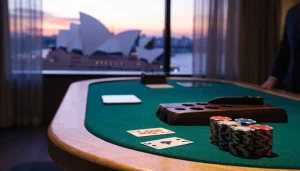
That distinction matters when you encounter a description of Aristocrat pokies as free to play. The wording describes a mode, not a separate type of game. It also does not, by itself, establish who made a game or whether a particular game is offered in that mode. A label such as “free” tells you how the described play is meant to function; it should not be treated as evidence about the game’s provider or its availability.
What free play changes
Free play lets you use a game without placing money at risk in that play session. The interface may still show reels, symbols, a credit counter and controls for starting a round. Those elements can resemble a real-money version, but a displayed balance in free play is not automatically money you own or can withdraw. It belongs to the play mode and should be understood according to the operator’s description of that mode.

The useful question is therefore not only whether a game is labelled free. You need to understand what the label means for the specific play environment: whether the credits are confined to the game, whether the mode involves any real-money stake, and whether the displayed result has any monetary consequence. Do not infer those conditions from appearance alone. Similar screens can represent different modes, while the presence of a credit counter does not show that the credits have cash value.
Free play can let you see how the interface behaves without making a real-money wager. It does not establish that a real-money version has the same terms, nor does it make outcomes in one mode a reliable guide to outcomes in another. The mode defines the context in which a round is played; visual similarity is not proof that the underlying conditions are identical.
What real-money play changes
Real-money play connects the game to a monetary stake. A result can then affect the player’s balance in financial terms, rather than only changing a display used within the game. That makes the mode materially different even when the reels and controls look much like those in free play.
The word “real” is important here because it separates game credits from money. A number shown on screen is not enough to tell you which kind of balance you are seeing. You must know whether the mode treats the credits as having value outside the game. Without that distinction, it is easy to mistake a simulated balance for a monetary one, or to assume that a free-play result carries over to another mode.
Free and real-money play should therefore be read as separate operating contexts, not as two descriptions of the same experience. A free session is not a real-money session simply because the interface looks familiar. Likewise, describing a game in real-money terms does not show that free play is available.
Do
- Treat free and real-money play as separate operating contexts
- Look for explicit statements of the mode in the description
- Understand the specific play environment's credit rules
Don't
- Infer the play mode from a game's visual appearance
- Assume a displayed balance in free play has cash value
- Treat labels for free and real-money play as interchangeable
Reading descriptions carefully
Searches for free Aristocrat pokies, Aristocrat pokies online free or similar wording combine a provider name with a play mode. Those words alone do not confirm that a particular title exists, that it is made by Aristocrat, or that it is available in free or real-money form. Keep the questions separate: identify what the description says about the game, then identify which mode it describes.
For any online pokie, look for an explicit statement of the mode rather than relying on a title, image or balance display. If a description says free play, treat it as a description of play without a real-money stake, not as a promise that the displayed credits have cash value. If it says real-money play, recognise that the monetary consequences are different. These labels are not interchangeable, and neither should be inferred from a game’s appearance.
How Bitcoin Deposits and Withdrawals Work
A Bitcoin deposit and a Bitcoin withdrawal use addresses in opposite directions. For a deposit, the casino supplies the destination address and you send Bitcoin to it from your wallet. For a withdrawal, you provide the destination address by copying your own wallet address into the casino’s withdrawal form. These steps describe a general payment process; they do not establish that any particular game, including an Aristocrat game, is available for real-money play.
Sending a deposit
The deposit flow begins at the casino’s payment page, where the casino displays an account address for receiving Bitcoin. You copy that address and use it as the destination in your wallet when preparing the transfer. The direction matters: the casino-provided address is where the funds are sent, not an address you enter as the recipient of a withdrawal.

Once you send the Bitcoin, the casino must recognise the incoming payment before it can credit the account. The transfer itself and the account credit are separate parts of the process: sending funds initiates the payment, while recognition is the operator’s step. A displayed address alone does not indicate that the account has been credited.
Bitcoin transfers also incur a miner’s fee. A specialist review describes such fees as usually minuscule, but the amount varies over time. The fee is part of the transfer process, rather than a fixed charge that can be assumed from one transaction to another. The amount shown when preparing a transfer is therefore more relevant to that transaction than a general description of fees.
Requesting a withdrawal
A withdrawal starts in the casino’s withdrawal form. You copy the address of the wallet where you want to receive Bitcoin and paste it into that form as the destination. This reverses the deposit direction: for a deposit, the casino provides the receiving address; for a withdrawal, you provide the receiving address.
The form submission is a request to send funds, not the same event as the funds arriving in your wallet. A specialist review reports that most Bitcoin withdrawal transactions are completed within an hour. That is a reported pattern, not a guaranteed completion time for every request. It should not be read as a promise about how quickly an operator will approve a request or how long a particular transfer will take.
Bitcoin Withdrawal
-
1
Open the withdrawal form
Access the casino's withdrawal section and locate the destination field.
-
2
Provide your wallet address
Copy the receiving address from your own Bitcoin wallet and paste it into the casino's form.
-
3
Submit the request
Confirm the details and submit the form to request the transfer of funds.
The distinction between the casino’s processing and the Bitcoin transfer helps explain why a single time estimate cannot describe every step. The player submits the wallet address and withdrawal request through the casino; the operator then handles the request and sends the Bitcoin. The cited timing concerns completion of most transactions, not a guaranteed service standard for all operators or circumstances.
Keep the address direction clear
The two forms of address entry are easy to confuse because both involve copying and pasting. For a deposit, copy the address displayed by the casino and use it as the destination in your wallet. For a withdrawal, copy your wallet’s receiving address and enter it in the casino’s form. In each case, the address identifies where Bitcoin is to be sent.
These mechanics explain how Bitcoin payments are routed, but they do not confirm that a particular title supports Bitcoin, or that a specific game is offered for real-money play. Nor does the reported withdrawal timing establish when an individual request will be processed. The payment flow and the operator’s handling of a request are distinct parts of the transaction.

Starting with Bitcoin: From Exchange to Casino Wallet
The general sequence has two parts: acquiring Bitcoin and moving it from a wallet to a destination address. These are separate actions. Buying Bitcoin through an exchange does not itself send it to a casino, and holding Bitcoin in a wallet does not establish that a particular game or service is available to you.
An exchange is one way to acquire Bitcoin using fiat currency. The exchange handles the purchase; the next step, if a transfer is made, is to send Bitcoin from a wallet to the destination address supplied by the receiving service. The wallet is the point from which the transfer is initiated, while the destination address identifies where it is directed. Those roles should not be confused: the exchange, your wallet and the receiving service are not necessarily the same account or system.
At a general level, the sequence is:
- Acquire Bitcoin through a cryptocurrency exchange using fiat currency.
- Have the Bitcoin available in a wallet from which you can send it.
- If a transfer is lawful and otherwise appropriate, direct it from that wallet to the receiving service’s wallet address.
This describes a payment route, not a recommendation to use an exchange, wallet or gambling service. It also does not establish that a service accepts Bitcoin, that a game is offered there, or that any Aristocrat title can be played online. A search for ways to play Aristocrat pokies online cannot, by itself, verify a game’s availability or connect a game title to a particular Bitcoin payment process.
Australia’s legal setting matters before any real-money gambling transfer is considered. The Interactive Gambling Act 2001 prohibits operators from providing real-money online casino games, including pokies, to people located in Australia. A general description of how Bitcoin can move between a wallet and a receiving address does not change that restriction. This section is informational, not an invitation to make a payment or use an offshore gambling service.
The distinction between purchase and transfer helps locate where a decision occurs. The exchange is where Bitcoin may be acquired with fiat currency; the wallet is used to initiate a later transfer; the receiving address specifies its destination. If any part of that route is unclear, do not treat the act of purchasing Bitcoin as a reason to proceed with a gambling payment. A transfer is a distinct financial action, and the destination should not be treated as interchangeable with a game name, casino account or exchange account.
Legal Warning
Under the Interactive Gambling Act 2001, operators are prohibited from providing real-money online casino games to people physically located in Australia.
The word “casino” in a payment description also does not prove that a service is lawful for Australian residents. Nor does a Bitcoin payment route establish that real-money play is available or permitted. The relevant distinction is between explaining how Bitcoin can be acquired and sent, and promoting a gambling service; this explanation does the former, not the latter.
This page is affiliate material and may include sponsored links. That disclosure does not constitute an endorsement or recommendation of any gambling service.
Assessing Offshore Casino Information Without Ranking Operators
Claims about Aristocrat casino sites need to be separated into distinct questions: what a review reports, what licensing information establishes, and what the game catalogue actually shows. These checks describe the information available to a reader; they do not establish that a particular Aristocrat title is offered or that a site is suitable for you.
A specialist review can provide an assessment of an operator, but its conclusions are still the reviewer’s judgements. Read the reasoning behind an overall rating rather than treating the rating as a finding of fact. Note whether the review discusses licensing and the range of pokies, and whether it explains how those points support its conclusions. A favourable description of a catalogue, for instance, is not the same as confirmation that a named game is currently accessible.
Reviews can also differ in what they assess. One may focus on the breadth of the game selection, while another may give more weight to its overall evaluation of the operator. Comparing the points each review actually addresses is more informative than treating two scores as directly equivalent. A review’s use of words such as “best” or “top” does not, by itself, show how the comparison was made.

Licensing is a separate check from review quality. Offshore operators discussed in this context hold licences primarily from Curacao eGaming or the Anjouan Gaming Authority. A licence statement identifies the regulator named by the operator; it does not tell you which particular games are available, nor does it independently substantiate every claim made in a review. Keep those questions separate instead of using a licence label as a shortcut for evaluating the catalogue.
Game selection is another specific claim to examine. A broad selection of pokies and the availability of Aristocrat titles are not interchangeable statements: the former describes range, while the latter concerns a particular provider or set of games. A review that praises variety does not establish that a particular Aristocrat game is included. Similarly, calling a site new does not establish what its catalogue contains.
For a comparison to be meaningful, the claims should be read at the level they address. Reviews offer evaluations; licence details identify a stated regulator; catalogue descriptions concern game range. None of those alone answers all three questions. Treating these as separate pieces of information prevents a general endorsement from being mistaken for evidence about a particular game.
This page contains affiliate material and may include sponsored links. That disclosure is not a recommendation or confirmation of any game’s availability. For Australian readers, it is also important not to confuse a foreign licence with local authorisation: the licensing description above concerns offshore operators, not an Australian licence.
Australian Legal Limits on Real-Money Online Pokies
Australian law draws a clear line between the location of the player and the location or licence of an operator. Under the Interactive Gambling Act 2001, an operator must not provide real-money online casino games to people physically located in Australia. That category includes pokies as well as casino-style card and table games. A website being accessible from Australia does not change the legal status of the service.

This means a locally licensed online casino cannot lawfully offer real-money pokies to Australian residents. The restriction concerns the operator’s provision of the service; it is not a distinction between particular game makers. A search for Aristocrat pokie titles, or a page describing online versions of such games, does not establish that a real-money service is legally available to Australians.
The operators discussed in connection with this market hold offshore licences, primarily from Curacao eGaming or the Anjouan Gaming Authority. Those licences are issued outside Australia. They do not turn an online casino service into one licensed to provide real-money pokies under Australian law. Nor does the presence of an offshore licence remove the prohibition on providing the service to people located in Australia.
The practical distinction is between a licence’s jurisdiction and the player’s location. An operator may have permission to operate under the rules of an overseas jurisdiction, while Australian law still prohibits it from providing real-money online casino games to customers in Australia. A licence name on a website, therefore, should not be read as evidence of Australian authorisation.
Age is a separate issue. The minimum age requirement for real-money gambling does not override the restriction on online casino services: being an adult does not make the prohibited service lawful for an Australian-based player. Likewise, describing a game as an online Aristocrat title does not alter the legal position. The relevant question is whether real-money online casino gambling is being provided to someone physically in Australia.
This is a legal boundary, not a recommendation to use an offshore site. Australian consumer protection laws do not apply to the offshore operators discussed, a consequence that should be considered separately from the prohibition on locally licensed services.
Consumer Protection
Australian consumer protection laws do not apply to offshore operators licensed outside of Australia.
This page contains affiliate material and may include sponsored links. That disclosure does not change the legal status of real-money online casino services in Australia and is not an invitation to use them.
What Offshore Licensing Means for Australian Players
An offshore licence and Australian consumer protection are separate matters. The operators discussed here are licensed outside Australia, but Australian consumer protection laws do not apply to them. That distinction affects what legal protections you can rely on if a dispute arises over an account, a payment, or an operator’s handling of your complaint.
A licence issued offshore does not make an operator subject to Australian consumer protection law. Nor does mentioning an offshore licence establish that an Australian authority oversees the operator or can resolve a player’s complaint. The key point is jurisdiction: the protections available under Australian consumer law do not extend to the offshore operators discussed.
This matters when assessing claims made about an Aristocrat casino or an online casino that appears to offer Aristocrat-branded games. A game name or a reference to Australian players does not change where the operator is based, which laws apply to it, or what protection you have if something goes wrong. The terms “Aristocrat casino online” and similar descriptions are not evidence of Australian oversight or consumer-law coverage.

A licence should therefore be understood as information about the operator’s stated regulatory setting, not as a substitute for Australian consumer protection. It does not, by itself, establish how a complaint will be handled, what outcome is available, or whether an Australian body can intervene. Avoid treating the word “licensed” as a complete answer to those questions.
This is distinct from whether an operator may offer a particular service to people in Australia. The issue here is what consumer-law protection applies to dealings with an offshore operator, not the legality of the service itself. A person looking for online Australian pokies or an Aristocrat online casino Australia listing should not infer from the wording that the operator is Australian or that Australian consumer protections cover the transaction.
The practical limit is straightforward: if you deal with an offshore operator, do not assume Australian consumer protection laws will provide a remedy. Any statements about licensing, complaint procedures, or player safeguards should be read as claims about that operator, not as a guarantee of protection under Australian law. This article contains affiliate material and may include sponsored links; that commercial relationship does not change the legal position described above.

Game Credits Do Not Establish a Fixed Bitcoin Value
A credit is a unit used within a particular game, not a standard Bitcoin denomination. Its Bitcoin value depends on the game’s credit settings and the current BTC price, so the same credit count cannot be assumed to represent the same amount across different games or at different times.
A specialist review describes this relationship between game credits and Bitcoin value. The practical distinction is between the number shown by a game and the value of the Bitcoin used to fund play: the display alone does not tell you how much Bitcoin a credit represents. A game’s credit unit has to be interpreted in that game’s own context, while the Bitcoin price can change independently.
This matters when comparing descriptions of Aristocrat pokies or reading a machine list. A title or credit count, by itself, does not establish a fixed Bitcoin value. Nor can a credit figure from one game be carried across to another as though the units were interchangeable. To understand a stated value, you need the relevant game’s credit information and the Bitcoin price at the time being considered.
The same limitation applies when a list presents games without explaining their credit settings. The list may identify titles, but it cannot, on its own, show what a credit means in Bitcoin terms. A value inferred from a past price or from another game may no longer apply. Treat credit counts as game-specific units, and Bitcoin amounts as dependent on the game and the prevailing BTC price.
When a Bitcoin Deposit or Transfer Goes Wrong
A Bitcoin transfer can reach the address shown on a payment screen without appearing in an account straight away. One possible cause is address reuse: the same address has been used for more than one payment, making it harder for the operator’s system to match a transfer to the right account. An underpayment can also prevent recognition if the amount received does not match the amount requested. In other cases, the operator may simply detect the deposit later.

If a payment is not showing, compare the destination address and amount in your own transaction record with the details displayed for that payment. Check whether the address was copied accurately and whether the amount sent matches the requested amount. Keep the transaction details available when contacting the operator. These checks can help identify a mismatch, but they cannot reverse a completed blockchain transfer.
An incorrect destination address creates a more serious problem. Bitcoin and Ethereum transactions are irreversible once sent, and transfers to the wrong address are generally unrecoverable. There is no routine cancellation step that returns the funds to your wallet. Before confirming any transfer, check the full address rather than relying only on its beginning or ending characters.
Do not send additional money to unlock a withdrawal that is stuck. A new payment does not correct an earlier transfer or resolve an account-side delay. Treat a request to pay more for that purpose as a warning sign, and seek an explanation through the operator’s stated support channel instead.
This article is affiliate material and may include sponsored links. Australian consumer protection laws do not apply to the offshore operators discussed.

Verification and Withdrawal Delays
A withdrawal can remain pending even when the wallet address is correct. The delay may occur inside the operator’s process: a request can wait in an approval queue, identity checks may be incomplete, or payments may be handled in batches during business hours. These are procedural holds, not evidence that the transfer was sent to the wrong address.
Some operators may request a further round of verification when you make your first withdrawal. Others may trigger it after your cumulative deposits reach an operator-dependent threshold; the reported range is AUD 2,000–5,000. The exact trigger therefore depends on the operator, and a pending request alone does not show which check is outstanding. KYC means identity verification, which may require documents or other information before a withdrawal is approved.
If a withdrawal is delayed, distinguish an account review from a payment-address problem before taking any action. Do not deposit more money to unlock a pending withdrawal. This is general information, not a recommendation to use an offshore casino. The page is affiliate material and may contain sponsored links; that disclosure does not change the legal limits on real-money online casino services in Australia.
Can Australians use Bitcoin at online casinos for entertainment?
You can use Bitcoin at offshore casinos that accept it, but Australian law prohibits locally licensed online casinos from offering real-money pokies to residents. Free-play mode does not involve money at risk, and Australian consumer protections do not apply to the offshore operators discussed.
Are Bitcoin casinos legit?
The operators discussed hold offshore licences, primarily from Curacao eGaming or Anjouan Gaming Authority. That does not make them Australian-licensed, and Australian consumer protection laws do not apply to them.
Is verification required?
You may be asked for further verification at your first withdrawal or after cumulative deposits of AUD 2,000–5,000, depending on the operator. Crypto checks may also involve signing a message from your deposit address or showing the wallet transaction.